Master Your Local Rank: Essential Strategies for 2026

Alright, so figuring out how to get your business seen online is kind of a big deal these days. It feels like every few months, something new pops up, especially with all the AI stuff. If you're trying to get local customers to find you, especially in 2026, you really need to pay attention to how things are changing. It's not just about having a website anymore; it's about being in the right place at the right time when people are looking for what you do, right in their neighborhood. This guide breaks down what you need to know to make sure your business shows up when it counts.
Key Takeaways
- Google Business Profile is still the main thing for local search. Make sure it's totally filled out and up-to-date.
- Reviews matter a lot, especially how you respond to them. AI is looking at this, so be real and helpful.
- Creating content that's super specific to your local area helps you show up for those local searches.
- Your website needs to work well on phones and load fast. This is a big deal for Google.
- Keep your business name, address, and phone number the same everywhere online.
Navigating The Evolving Local Search Landscape
Understanding The AI-First Search Reality
Okay, let's get real about how people find businesses today. Forget what you thought you knew about search. We're not just talking about Google anymore. AI chatbots like ChatGPT and Gemini are now where a huge chunk of searches are happening. This means instead of a list of links, people are getting direct answers synthesized from tons of information. If your business isn't showing up in these AI-generated responses, you're basically invisible to a growing number of potential customers. It's a big shift, and it's happening now. The old way of just trying to rank on Google feels like a distant memory.
The Shift From Traditional Search Paths
Remember when searching for a local business meant typing "plumber near me" into Google, looking at the map pack, clicking a website, and then maybe calling? That's mostly gone. Now, someone might ask their AI assistant, "Who's the best plumber in Sacramento?" The AI then pulls together info from reviews, business details, and other sources to give a direct recommendation. This often means the customer calls the business straight from the AI's answer, never even visiting a website or Google Maps. It's a much shorter path from question to action, and businesses need to be ready for it.
Here's a look at the old versus the new:
| Search Path | Traditional (2020-2023) | 2026 AI-First Path |
|---|---|---|
| User Action | Searches Google, views map pack, visits website, calls | Asks AI assistant, gets direct recommendation, calls |
| Information Source | Google's organic and local results | AI synthesis of reviews, content, business data |
| Customer Journey | Longer, multiple steps | Shorter, direct to decision |
Why Local SEO Remains Crucial For Businesses
Even with all these changes, local SEO isn't dead – it's just different. In fact, it's more important than ever, but the focus has shifted. We're talking about making sure your business information is accurate and easily understood by AI. It's about building trust and showing you're the real deal. Think about it: AI needs data to make its recommendations. If your business isn't well-represented online, with good reviews and clear information, the AI won't pick you. Optimizing for geographic relevance means your business shows up when and where people are actually looking, even if that's through an AI chat interface. It's about being found in this new, smarter search environment.
Mastering Google Business Profile For Local Rank
Your Google Business Profile (GBP) is basically your business's front door on Google. If it's not set up right, people might just walk on by. It's not just about listing your name and address anymore; it's about making sure Google sees you as the best answer for local searches. A well-optimized GBP is your single most important asset for local SEO in 2026. Think of it as your primary tool for showing up in the map pack and even in those new AI-generated answers.
The Foundational Importance Of GBP
Seriously, if you haven't claimed or verified your GBP, do that first. Go to business.google.com. It's how Google knows you're a real business at a real location. Without it, you're pretty much invisible to local searchers. It's the bedrock for everything else we'll talk about. Getting this right means you're playing the game.
Optimizing Your GBP For Maximum Visibility
Okay, so you've claimed it. Now what? Optimization is key. This means filling out every single section completely and accurately. Here’s a quick checklist:
- Business Description: Write a clear, concise description. Use local keywords naturally, but don't stuff them in. Tell people what you do, who you help, and where you are.
- NAP Consistency: Your Name, Address, and Phone number must be identical across your GBP, website, and any other online directories. This builds trust with Google.
- Categories: Pick the most accurate primary category and add relevant secondary ones. This helps Google understand what services you offer.
- Products & Services: Detail exactly what you sell or do. Use this space to highlight specific offerings.
- Photos & Videos: Upload high-quality images of your business, team, and products. Visuals make a big difference.
- Hours & Attributes: Keep your operating hours, holiday closures, and other attributes up-to-date. Nothing frustrates customers more than incorrect information.
- Posts: Use Google Business Profile posts regularly – think 2-3 times a week. Share updates, offers, or events. This keeps your profile active and gives you more chances to rank.
The goal with GBP optimization is to give Google all the information it needs to confidently show your business to the right local searchers. It's about making it easy for both Google and potential customers to understand what you offer and why you're the best choice.
Leveraging GBP Insights For Strategic Decisions
Once your profile is optimized, you need to see what's working. That's where GBP Insights comes in. It's like a mini analytics dashboard for your business listing. You can see how people are finding you (e.g., direct searches vs. discovery searches), what actions they're taking (calls, website clicks, direction requests), and even the search terms they used. This data is gold for refining your strategy. For example, if you see a lot of people searching for a specific service you offer but aren't ranking for, you know where to focus your content or GBP updates. It helps you understand your local search visibility and make smarter choices about where to invest your time and resources.
| Metric | What it Tells You |
|---|---|
| Search Queries | What terms people use to find your business |
| Views (Search/Maps) | How often your profile appears in search results |
| Actions (Website/Call) | How many people take a desired action from your listing |
| Photo Views | How popular your images are compared to competitors |
Regularly checking these insights helps you adapt your approach and stay ahead of the competition.
Leveraging AI And Reviews For Prominence

It's not just about getting found on a map anymore. With AI becoming a bigger part of how people search, especially for local businesses, reviews and how you manage them have become super important. Think of your reviews as direct input for AI systems. When someone asks a chatbot or AI search for a local recommendation, it's often pulling information straight from your Google Business Profile (GBP), and reviews are a huge part of that data. This means your review strategy directly impacts whether AI suggests your business.
AI-Optimized Reviews As A Ranking Factor
Google and other AI search tools look at reviews for a few key things. It's not just about having a lot of them, though that helps. They check:
- Quantity: More reviews generally mean more trust, but it's about hitting certain levels. Going from 10 to 50 reviews is a bigger jump than from 200 to 250. Aim for steady growth.
- Recency: Old reviews don't tell AI much about your current business. Recent feedback is way more important. Try to get new reviews coming in regularly, even just a few each month.
- Sentiment & Specifics: AI can read what people are actually saying. If multiple reviews mention your "quick service" or "friendly staff," AI picks up on that as a positive signal. Conversely, repeated complaints about "long wait times" can hurt.
The content of your reviews is now a direct signal to AI. It's not just about a star rating; it's about the details customers share. These details help AI understand your business's strengths and weaknesses, influencing its recommendations.
Responding To Reviews With Genuine Engagement
Just getting reviews isn't enough; you have to respond to them. This shows you're an active business that cares about customer feedback. Aim to reply to every single review, good or bad, within 24-48 hours. For positive ones, a simple thank you goes a long way. For negative feedback, acknowledge the issue, apologize if appropriate, and offer to discuss it further offline. This shows potential customers that you handle problems professionally. Not responding can actually signal to Google that your business isn't actively managed, which can impact your local SEO performance.
Synthesizing Information For AI Overviews
Your Google Business Profile description, services listed, and especially your reviews are all data points that AI uses to create summaries, often called AI Overviews. If your reviews consistently highlight specific services or positive aspects of your business, AI is more likely to include that information when it generates a recommendation. This is why having detailed, positive reviews is so powerful. It's like feeding the AI exactly what it needs to confidently suggest your business to searchers. Keeping your profile updated and actively managing reviews helps ensure your business is accurately represented in these new AI-driven search results, which are becoming increasingly common for local searches.
Building Hyperlocal Relevance And Authority
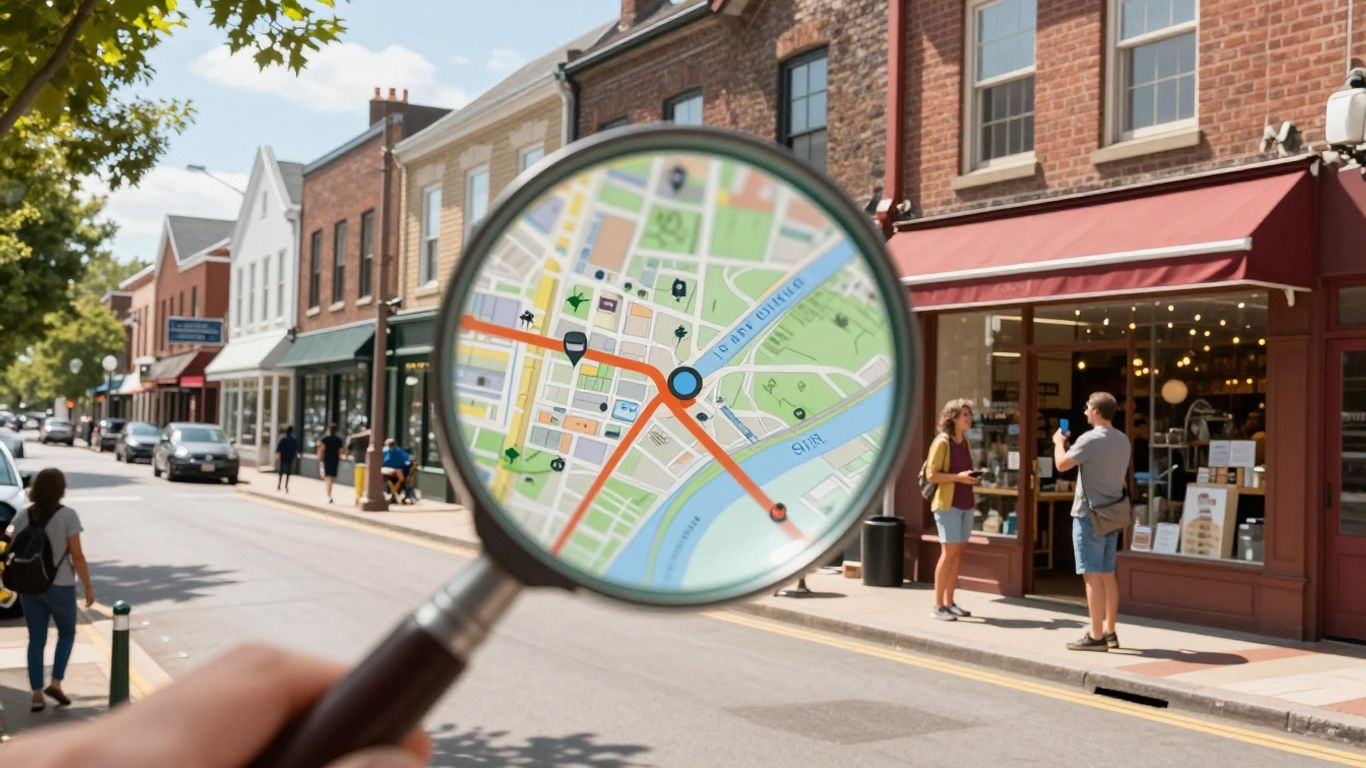
Okay, so we've talked about Google Business Profile and reviews, but how do you really get noticed by people right in your neighborhood? It's all about showing you're a part of the local scene, not just some business that happens to be there. Think of it like being the friendly face at the community picnic, not just a stranger walking by.
Creating Hyperlocal Content Clusters
This means making content that speaks directly to the specific neighborhoods or even streets you serve. Instead of just writing about 'plumbing services,' write about 'plumbing issues common in old Victorian homes in the Elmwood district' or 'best ways to keep your garden thriving in the dry summer heat of the Valley region.' You want to create a bunch of related content pieces – like a little cluster – that all point back to your business and show you know the area inside and out. This helps search engines understand you're the go-to for that specific spot. It's about being super specific, not just general.
Demonstrating E-E-A-T In Local Search
Remember E-E-A-T? Experience, Expertise, Authoritativeness, and Trustworthiness. For local search, this gets a bit more personal. It's about showing you have real experience in the local community. Did you grow up here? Do you sponsor the local Little League team? Have you been serving the same families for years? This kind of stuff builds trust. Think about local partnerships, community involvement, and even local press mentions. These aren't just nice-to-haves; they're signals that you're a legitimate, trusted part of the local fabric. It's not just about what you know, but how you show you belong.
The Role Of Website Content In Local Rank
Your website is your digital storefront, and it needs to scream 'local.' Make sure your 'About Us' page talks about your local roots. Have a dedicated page for each neighborhood you serve, detailing services specific to that area. Share customer stories from local clients – with their permission, of course. Even your blog can be a goldmine for local content. You could create guides to local attractions, discuss local events, or even interview other local business owners. This kind of content shows search engines and potential customers alike that you're deeply connected to the area. It's about making your website a local resource, not just a place to buy things. You can find some advanced hyper-local SEO strategies for 2026 that really focus on this neighborhood-level relevance.
Building hyperlocal relevance isn't just about stuffing keywords related to your town. It's about genuinely engaging with and contributing to the local community, then reflecting that involvement clearly in your online presence. This builds authentic trust that generic businesses can't easily replicate.
Here’s a quick look at how to build that local connection:
- Local Partnerships: Team up with non-competing local businesses. Maybe you can cross-promote on each other's websites or social media.
- Community Involvement: Sponsor a local event, join the Chamber of Commerce, or volunteer. Getting your name out there in a positive, local way matters.
- Local Press: Build relationships with local journalists. If you have something newsworthy – an award, a new service, a community initiative – let them know.
- Local Resources: Create helpful guides or data about your specific area. For example, a real estate agent could create a guide to local school districts.
Strengthening Your Technical Foundation
Think of your website's technical foundation like the foundation of a house. If it's shaky, nothing built on top will stand strong, no matter how fancy the decor. For 2026, this means making sure search engines can easily find, understand, and interact with your site, especially on mobile devices. A technically sound website is non-negotiable for local search success.
Ensuring Mobile-First Indexing Compliance
Google now looks at the mobile version of your website for ranking. This isn't just about having a mobile-friendly design; it's about ensuring the mobile experience is complete and functional. This includes making sure all content, links, and structured data are present and correct on the mobile version. If your desktop site has content that's missing on mobile, you're going to have problems.
- Test your mobile usability: Use Google's Mobile-Friendly Test tool. It's quick and tells you if your pages are easy to use on a phone.
- Check for content parity: Make sure the text, images, and videos on your mobile site match your desktop site.
- Verify interactive elements: Buttons and links should be easy to tap without zooming.
- Ensure fast loading on mobile: Mobile users are often on slower connections, so speed is extra important.
Mobile-first indexing means your site's mobile version is the primary one Google uses. If your mobile site isn't up to par, your rankings will suffer, plain and simple.
Optimizing For Core Web Vitals And Speed
Page speed isn't just a nice-to-have anymore; it's a direct ranking factor. Core Web Vitals (CWV) are Google's way of measuring user experience related to speed, interactivity, and visual stability. Getting these right can make a big difference.
Here's a quick look at the key metrics:
| Metric | Target |
|---|---|
| Largest Contentful Paint (LCP) | Under 2.5s |
| First Input Delay (FID) | Under 100ms |
| Cumulative Layout Shift (CLS) | Under 0.1 |
To improve these, focus on optimizing images, reducing JavaScript execution time, and using efficient code. Tools like Google PageSpeed Insights can give you specific recommendations.
Implementing Structured Data For Richer Results
Structured data, or schema markup, is like giving Google a cheat sheet about your business. It helps search engines understand your content more precisely, which can lead to richer search results like star ratings, business hours, or FAQs appearing directly on the search results page. This makes your listing stand out and can improve click-through rates. It's also becoming increasingly important for AI Overviews and voice search.
- Implement
LocalBusinessschema with your NAP, hours, and service areas. - Use
Serviceschema for each of your offerings. - Add
RevieworAggregateRatingschema if you have customer testimonials. - Consider
FAQPageschema for pages with frequently asked questions.
Getting these technical aspects right might seem like a chore, but they form the bedrock of your local SEO efforts. Without them, even the best content and marketing strategies will struggle to gain traction.
Strategic Link Building And Citations
Okay, so we've talked about getting your Google Business Profile dialed in and making sure your website is technically sound. Now, let's get into the stuff that really tells Google and potential customers that your business is a real, active part of the local scene: citations and links.
Acquiring High-Quality Local Links
Think of local links like recommendations from other businesses or organizations in your area. When a local news site, a community group, or even a complementary business links to your website, it's a strong signal that you're a legitimate player. It's not just about getting any link, though. Quality really trumps quantity here. One solid link from a respected local source is worth way more than a dozen from random, low-traffic directories.
Here are some solid ways to snag these valuable local connections:
- Local Partnerships: Team up with businesses that aren't your direct competitors but serve a similar audience. Maybe you can cross-promote on each other's websites or collaborate on a local event. Think of a bakery partnering with a local coffee shop.
- Community Involvement: Sponsor a local Little League team, donate to a community charity, or participate in local festivals. Often, these activities come with a mention and a link on the event or organization's website.
- Local Press & Media: Build relationships with local journalists. If you have something genuinely newsworthy – like a significant expansion, a unique award, or a community initiative – send out a press release. You might get featured in the local paper or on a community blog.
- Resource Creation: Develop helpful local guides or data. For example, if you're a plumber, a "Guide to Winterizing Your Pipes in [Your Town]" could attract links from local real estate agents or home improvement blogs. Check out this guide for more on local SEO tactics.
Maintaining Consistent NAP Information
NAP stands for Name, Address, and Phone number. This might sound super basic, but getting it wrong can really mess things up. Google uses these details across various online directories and platforms to confirm your business's identity and location. If your business name is listed one way on Yelp, slightly differently on Facebook, and has an old phone number on another site, Google gets confused. This inconsistency can hurt your ability to show up in local searches.
- Exact Match: Your NAP details must be identical everywhere. No "St." on one site and "Street" on another. No "Suite 100" on one and "Apt 100" on another.
- Local Numbers: Use your actual local phone number, not a generic toll-free one, if possible.
- GBP First: Always make sure your NAP on your Google Business Profile is the "master" version, and then update all other listings to match it exactly.
- Regular Audits: Schedule time, maybe quarterly, to check your listings. Tools exist to help you find where you're listed and if the information is correct. This is a tedious but necessary chore.
Keeping your business information accurate and consistent across the web is like building a solid foundation for your local online presence. It might not be the most exciting part of SEO, but it's absolutely vital for trust and visibility.
The Diminishing Role Of Basic Citations
Years ago, just getting listed in as many online directories as possible was a big deal. That's not really the case anymore. While having your NAP on major platforms like Google, Apple Maps, and Bing is still important, stuffing your business into hundreds of low-quality, irrelevant directories won't give you much of a boost. Search engines are smarter now. They prioritize relevance and authority. So, instead of chasing quantity, focus on getting listed on directories that are actually used by your potential customers or that have a strong local connection. Think industry-specific sites, local chamber of commerce pages, or reputable community websites. Managing your business directories strategically is key.
Measuring Success And Adapting Strategies
So, you've put in the work, right? Optimized your Google Business Profile, churned out some great local content, and maybe even spruced up your website. That's awesome. But how do you know if any of it is actually working? That's where this part comes in. It’s all about looking at the numbers and figuring out what's hitting the mark and what's just… not.
Tracking Map Pack And Organic Rankings
First off, you gotta keep an eye on where you're showing up. Are you in that coveted map pack for local searches? How about the regular organic results? This isn't just about vanity; it directly impacts how many people actually see your business when they're looking for what you offer nearby. We're talking about tracking your position for key local terms. Think about terms like "plumber near me" or "best pizza downtown." If you're not showing up for those, well, that's a problem.
Here’s a quick look at what to monitor:
- Map Pack Visibility: Are you appearing in the top 3 local results? This is prime real estate.
- Organic Ranking: How are you doing for relevant local keywords in the main search results?
- Keyword Performance: Which specific local search terms are driving traffic and engagement?
- Competitor Rankings: How do you stack up against other local businesses in your area?
Utilizing Automated Reporting Dashboards
Manually pulling reports every week can feel like a chore, and honestly, who has the time? That's why automated dashboards are a lifesaver. These tools pull data from various places – like your Google Business Profile insights and website analytics – into one spot. It gives you a real-time snapshot of how things are going without you having to dig through a dozen different reports. You can set up dashboards to show you the metrics that matter most to your business, whether that's calls, direction requests, or website visits. This helps you spot trends quickly. The goal is to make data accessible and actionable, not overwhelming.
Keeping an eye on your performance doesn't have to be complicated. The key is consistency and focusing on the metrics that actually move the needle for your business. Don't get lost in the weeds of every single data point; focus on the big picture and what it tells you about your local customers.
Continuous Monitoring And Performance Analysis
Okay, so you've got your rankings and your dashboard. Now what? You need to actually look at the data and figure out what it means. Is your map pack visibility improving after you tweaked your Google Business Profile description? Did that new blog post about local events actually bring more people to your site? This is where you connect the dots between your actions and the results. It’s about looking at the trends over time. Maybe your calls are up, but your website visits are down. That might mean your GBP listing is doing great, but your website isn't converting visitors effectively. You'll want to analyze things like:
- Click-Through Rates (CTR): How many people see your listing and actually click on it?
- Conversion Rates: Of those who click, how many take a desired action (call, visit, form submission)?
- Review Velocity and Sentiment: Are you getting more reviews, and are they positive?
- Local Traffic Sources: Where are your local website visitors coming from?
This analysis helps you see what’s working and what’s not, so you can adjust your local SEO strategies accordingly. It’s not a set-it-and-forget-it kind of deal. You have to keep watching, keep analyzing, and keep tweaking. This ongoing process is what separates businesses that just exist online from those that truly dominate their local search space. Remember, the local search landscape is always changing, so staying on top of performance is non-negotiable.
Wrapping It Up: Your Local SEO Journey for 2026
So, we've gone over a lot, right? It might seem like a lot to take in, especially with how fast things are changing with AI and all that. But honestly, it boils down to a few key things. Make sure your Google Business Profile is top-notch, get those reviews coming in and respond to them like a real person, and create content that actually helps people in your area. Don't forget the technical stuff for your website either – it's the foundation. It’s not about doing everything perfectly all at once. It’s about being consistent, paying attention to what works, and not being afraid to adjust as things shift. Keep at it, and you'll be in a much better spot to grab those local customers in 2026 and beyond.
Frequently Asked Questions
Why is local search so different now?
Think of it like this: before, people searched on Google and saw a list of places. Now, smart computers (AI) often give the answer right away, using info from many places like reviews and your business details. So, if your business isn't showing up in these quick AI answers, people might not even know you exist, even if they're right next door!
Is Google Business Profile still important?
Yes, absolutely! Google Business Profile (GBP) is like your business's online storefront on Google. It's super important for showing up when people search for things nearby. Making sure it's full of good info, pictures, and updates helps people find you easily.
How do online reviews help my business rank higher?
Online reviews are like votes of confidence from your customers. When you have lots of good reviews, and you reply to them nicely, it tells Google (and other AI tools) that your business is trustworthy and liked. This helps you show up more often when people are looking for services like yours.
What is 'hyperlocal content'?
Hyperlocal content means creating information on your website or social media that is very specific to your local town or neighborhood. For example, if you're a bakery, you might write a blog post about the best local parks to have a picnic with your pastries. This shows you're a part of the community and helps people searching for local things find you.
Does my website need to be fast and work on phones?
Definitely! Most people use their phones to search when they're out and about. If your website takes too long to load or looks messy on a phone, people will leave. Google also pays attention to how fast your site is and how well it works on phones when deciding where to show you in search results.
Are getting listed on many websites (citations) still a big deal?
Getting your business name, address, and phone number (NAP) listed correctly on important websites is still useful, but it's not as important as it used to be. The focus has shifted more towards having a great Google Business Profile, lots of good reviews, and helpful content. Making sure your NAP is the same everywhere is still key, though!